Magic the Gathering: Pick Your Color
Our first post on Magic: The Gathering dealt some with decks and how the different types of cards break down. The next big area of Magic: The Gathering to be discussed are the different colors of cards.

As you can see on the back of the card, there are five different colors: White, Blue, Black, Red, and Green. Each of these colors have different abilities or styles of play that are common to them. Some decks that people build use a single color, or they may use multiple colors. Colors that are next to each other on the image that appears on the back of every card are called “ally colors.” For example, white’s ally colors are green and blue, as seen above. So some people will build decks using all three of those colors, or may use just two of those colors when building decks.
Red:
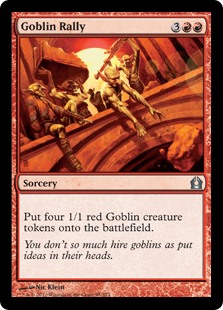
Red decks are built around getting damage out fast. The creatures in this category are small and often have haste (this allows a creature to attack during the same turn it comes into play, instead of having to wait until the next turn). Along with these small creatures, there are many red cards that deal direct damage to an opponent’s life points or their creatures.
Green:
Green decks are built around big stompy creatures that take more time to play because of their high mana cost, but when they do get played, they can do a lot of damage to opponents’ creatures and life points. Green decks also have combat tricks that allow them to do more damage or use skills like trample (when a creature is able to do damage to a player even when blocked).
White:
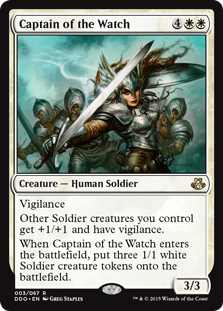
White decks will often have a lot of small creatures, but as compared to red, white’s creatures build up into something bigger while protecting the player. White decks often have a number of enchantments or other cards that improve the small creatures in these decks and make them harder to deal with the longer the game goes on. The abilities in white decks include lifegain (when a creature you control deals damage, you gain life) or vigilance (when attacking with a creature, you don’t have to “tap” it, or take it temporarily out of play — it’s still able to block an opponent’s creatures on their turn).
Blue:
Blue decks are often called control decks. These decks will have a number of smaller creatures, often with flying (creatures with flying can’t be blocked by creatures without flying), but are primarily built around instant cards. Common instant cards in the deck are counter spells, which stops an opponent from casting a card, or bounce spells, which return cards to players’ hands, or draw more cards. Blue decks are the opposite of red decks because blue decks deal damage slowly and force the games longer.
Black:
Black decks have a wide variety of creatures, with a number of them having deathtouch (any amount of damage dealt to an opponents creature kills that creature). Spell cards that are black often kill opponents’ creatures or cause your opponent to lose life points. Black decks can also make opponents discard cards. Black has some traits that the other colors have, but with more destructive tendencies.
So, as you can begin to tell, when you combine different colors, you can create decks that do different things. A blue and white deck is built around being able to build up your small army while controlling the board position of your opponent. Black and red is all about fast play and getting rid of your opponent’s creatures while doing damage quickly. Different colors work better for different players; if you find out that you are an aggressive player, blue probably isn’t the color for you. If you want to control the board, however, blue is the perfect color for you. Green is for people who are fine biding their time a little bit, but who like to create the sense of impending doom while building up to something very dangerous. It’s good to experiment with different colors and color combinations to see what is the best for you, and don’t be surprised if it changes over time.
———
Share questions, ideas for articles, or comments with us!
Email us at nerdologists@gmail.com
Follow us on Twitter at @NerdologistCast
Message me directly on Twitter at @TheScando
Visit us on Facebook here.
Good article, but don’t forget to talk about the non-creature aspects, such as the general themes of the colors. The very aspects that a color embraces can often give people a better idea of overall play-styles to expect:
White – This color embraces order, justice, and divinity, focusing on the group as a whole over the individual. Many mechanics revolve around lifegain and balancing the playing field (while slowly tipping the scales in their favor). Structure is perfection, and looks to benefit all those within its grasp, but doing so as they dictate. Even though White is seen as the color of justice, leaving it unchecked can result in it turning into a very authoritarian role, dictating how the game progresses and is played.
Black – The color of death and personal gain at “no matter the cost”. Risky, opportunistic, and amoral, Black’s approach benefits from the suffering of all. Everything at your disposal is a resource, and can often exchange one for another, such as trading life for additional cards, or sacrificing your creatures to harm your opponents. Black magic trusts no one but themselves and will do whatever it takes to rise in power.
Blue – Intelligence is paramount to the Blue mage. Careful planning and knowing when to strike is just as important as brute force, and Blue embraces this approach. Not instinctual in nature, it instead takes a logical approach to dealing with threats and overtaking the opponent. Knowledge and illusion are a Blue mage’s weapons, so many spells revolve around drawing cards and planning and shaping your strategies to fit the current situation.
Red – The color of passion and chaos, no other color plays as impulsively as Red. While often acting first and thinking second, it does so with purpose for an end goal of doing as much as is possible in the shortest amount of time. Red mages embrace the aspects of fire and passion, being able to shift their plans at a moments notice if needed to keep up the momentum. Direct damage and being able to shift the roles of their resources on the fly admist the chaos is where a Red mage revels.
Green – Embracing the ideals of the instinct and “survival of the fittest”, Green looks to change the field around them through individual action and growth. However, green is not necessarily selfish, but rather looks to resolve conflict through the life cycle, with its spells and creatures often giving way to new life. Obtaining mana resources comes naturally to Green, allowing for big spells to occur earlier. Through pure strength, Green seeks to overcome all obstacles.