
Shallow versus Depth and Simple versus Complex in Board Games
I figured it was time to nail down some terms for board games that I use. And two of the bigger combos are going to be what is a Shallow game versus a Deep game and how that differs from a Simple versus a Complex game. Plus, we’re talk a bit about how games can be learn and simple to play or vice-a-versa.
Simple vs Complex
Simple vs Complex can actually be broken down into a couple of different ways. One is going to be for learning a game, the other is going to be the actual playing of the game. Mainly, because I think that some games can be a bit of both. Perdition’s Mouth: Abyssal Rift, which I wrote about yesterday, I think that game play can be simple. But learning the game is a challenge.
Learning
A game is complex to learn when the rule book is difficult to get through. This can be for a number of a reasons. It might be that a game is challenging to get through because of a lot of different reasons. It might just be a big rule book, or a lot of specific side situations. Or just a poorly done rule book that is hard to reference when you need to.
Versus a simple rule book, that is going to be one where it lays out out clearly and the game is not that challenging to pick-up. Even with a more complex game, a simple rule book is going to give you the information you need and not much more.
Playing
For playing, simplicity and complexity can be in two different areas. Firstly, if a game is simple, turns are going to be simple. I do one thing on my turn, and it’s done. So I know what I want to do right away, I do that action, and I know how that action is going to go. Something like Century: Golem Edition (or Spice Road) is an example of this. On my turn, I get a card, I pick up my played cards, I get a golem, or I play a card. I do one of those things and all are straightforward.
A more complex board game is going to create more questions in what you are doing. When you select an action, it branches into many more things that you can do. Kind of like a bunch of combos happening. Sonora, for example, is complex for a roll and write because everything combos into everything else.
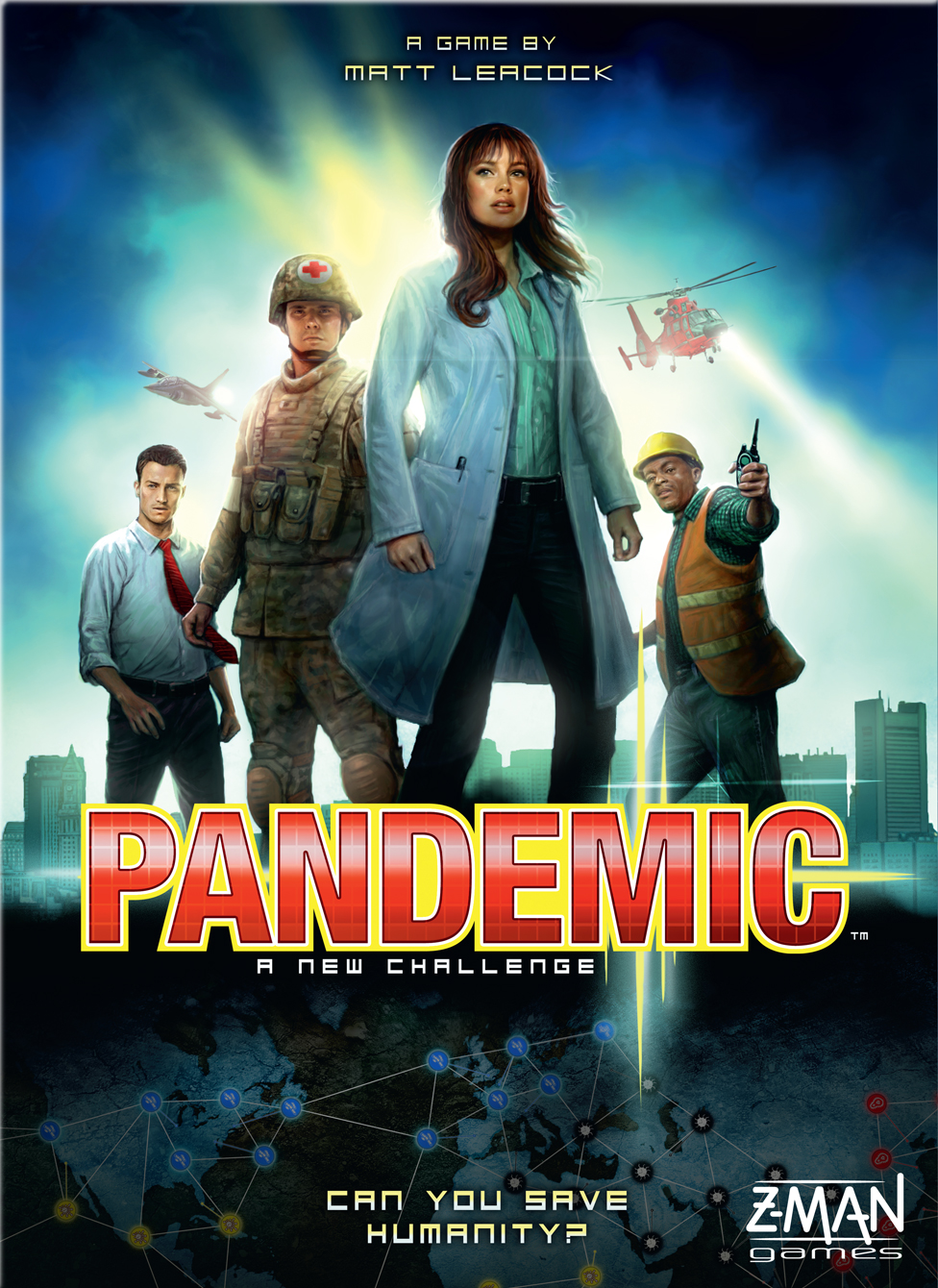
Another way board games add complexity is through housekeeping. This is the idea that you don’t just need to know what you do on your turn, you need to know what the game does. One that’s a bit more simple for this is Pandemic. Unless there is an epidemic, you flip a card and put out a cube. But there are games, Lord of the Rings: Journeys in Middle-Earth, for example, where there is a lot that you need to do.
Shallow vs Deep
But now let’s talk about shallow versus deep for a game. Because, I think at times, people get the two concepts confused a little bit with how I talk about them. A shallow board game is going to be one where the decisions I make are pretty straightforward. I don’t need to think about the complexity of a game when considering if a game is shallow. A game with depth is going to give you a lot of meaningful decisions. It is the space where you need to consider and weigh your actions carefully.
For example, the actions while playing Perdition’s Mouth: Abyssal Rift might be simple as you execute them, but the decision space for what action you take at what moment that offers real depth for the game. Compare that to Sword & Sorcery, where the execution of the action is not that complex, but the turn is a bit more complex as a whole, but what you should do on your turn is not that deep.
What Combinations Can Board Games Be?
So, I think that there are three combinations of this that I like. And the rule book is it’s own thing, so that won’t factor in too much. I think too complex rulebook especially if it’s not laid out well, is a barrier to entry that is just a bit too steep. And so a lot of gamers won’t get to see if the game itself is complex or simple, or shallow or deep.
The first combination is shallow and simple.
I like this one for my party games, filler games (generally) and dexterity games. I don’t want the game to feel like it’s too much. Pulling out the game should mean that I can teach it and play it fast. Something like Wits & Wagers is a game that is shallow and simple. Same with something like Ice Cool.
The next one is deep and complex.
This is going to be your bigger games, something like Gloomhaven stands out this way. There is a lot in Gloomhaven to keep track of, and the decision space of what cards you choose to play is really intriguing. So, the decisions really matter and you need to keep track of a lot of rules, statuses, things like that, in your head.
Finally we have deep and simple.
I love games in this area. Ones that give you good decisions to make while not bogging you down in a ton of rules. Res Arcana is a game that does this. I can build out an engine with eight cards, and my goal is just get it running faster and better than yours. Or Hanamikoji is also great. You only do four actions in the game. But when you do each one, and which cards you use, it’s so tough.
I don’t like shallow and complex.
Needless to say, there is one that I don’t like, that is when a game is shallow and complex. In that case, it seems like they are just adding in rules to make the game seem more challenging, but when you get down to it the base of the game is very simple in what you are doing. If you have a thirty page rule book to cover all the one off scenarios but I only ever use 10% of the basic rules in my game and it’s always obvious what to do, I’m am not going to be interested in the game.
I think that a game that kind of falls into that trap is Sword & Sorcery. Now, there are interesting decisions to make, early on, when you play Sword & Sorcery. However, the more you play, the more you just drop into a routine of what you are doing. Move, fight, is your best ability on cooldown, use the next best one, repeat. The decision space shrinks as you go because there are obvious choices in what to do.

Final Thoughts on Different Types of Board Games
I think that players are going to have those different sweet spots. Some people are really going to want to play those heavy and crunchy games that take a lot of complexity to remember everything and give you a lot of decision space. And I even like some of those games.
But when a game can really pull off the simple but deep combination it is a gem to play. Stuff like Res Arcana, Hanamikoji, or Century: Golem Edition stand out as amazing games this way. They offer really fun decisions and interesting decisions without bogging you down in a ton of different edge cases or steps to your turn that you need to keep track of.
For me, complex and shallow is just going to be a killer, though. If I need to put a lot of effort into playing your game, I expect a full and rewarding game play. And if that doesn’t exist, well, that’s an issue. At that point in time, it makes learning the game and playing the game feel like a chore, or work. It’s a bit like a task at work where you need to copy information from 30 e-mails into fields in a spreadsheet. You need to make sure everything ends up in the right spot, but you don’t need to think about it too hard.
Which is your favorite intersection for a board game with Shallow and Deep, as well as Simple and Complex?
Send an Email.
Message me directly on Twitter at @TheScando
Visit us on Facebook here.
Support us on Patreon here.
1 Comment