
Top 5 Mistakes Made When Teaching A New Board Game
Teaching a board game is way less fun than playing a board game. And when teaching a new game for the first time, or even teaching it for the 10th time, there are some mistakes that people often make. Let’s go over what some of the top board game teaching mistakes are.
Top 5 Mistakes
1. Reading From the Rule Book
Don’t just read the rules. This I think is tied with my #2 as the worst offenders when teaching a game. But it’s not interesting or exciting to hear someone read from the rules. Also, all the rules might not always matter or be taught in the rule book in the best way possible. There are some horrible rule books out there and even the good ones tend to be dry.
The rules are important to get right, but use the rule book as a reference when you need it. Don’t use it for how you teach the game. This will make sense more when you see some of the other things.
2. Not Starting With How To Win
Such as if you use the rule book, how to win or scoring is at the end of the book. Start with that part. That gives the players a framework of what the goal is. It let’s them know what everything else you teach is going to be pointing towards.
Now, you don’t need to go into the details, for example, of where you get your points, but let people know it’s a point based game, or if everyone is still alive when this deck of cards runs out, or if everyone is on this tile. Put the end goal in focus first so that when you teach the actions and specific rules your players know where the game is going and can start to see how they’d bring it together.
3. Teaching Every Detail
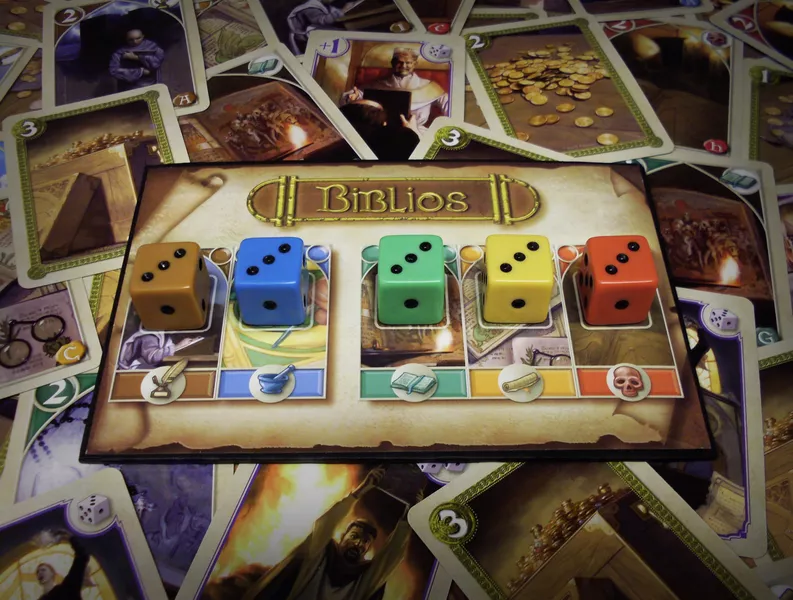
This one might seem odd, but you don’t need to teach everything. For example, Biblios comes in two halves. The first half is handing out cards. Teach that when you start. Let people know the second half, auction is coming up and that you want money to bid on stuff. But you don’t need to explain all the auction details. Then, when you hit that second part, teach it.
This works well for some games and less well for others. But even in games where maybe a new action becomes unlocked or when a weird interaction occurs between a card and rules. It’s useful to know that it might happen, but the full details, probably don’t need them until it does happen.
4. Telling Not Showing
Another important thing, and why reading from the rule book is less than ideal is that you are just telling. Telling is fine, it is a part of teaching, but to get something to stick, showing helps a lot. Show people how an action works. Show people cards from decks. Fill in spots on a roll and write sheet. Do these things and it reenforces how all of the things work.
An example of this is that in most roll and write games I keep used sheets. Why, because they are great for teaching. I can pull out a sheet and point to examples on the board as I’m teaching the game. It makes it so much clearer when people can see how it works when you are explaining it.
5. Holding Questions Until The End
And this one, I think that it’s important to not hold questions. Let people ask away because people might forget questions. Often times the players will notice just naturally something that you missed. Or wording that you thought was clear might be more ambiguous than you think.
If people hold questions, they might forget them. Now, if someone asks about another part of the game, just say that you are going to get to it. But if it’s about something you’re talking about already. Take a moment, talk about it. Repeat stuff as need be, clarify what you are saying. And I think it is important as well, but stay it is in a different way.
Final Thoughts on Mistakes in Teaching A Board Game
The most important thing, no matter how you do it is that you teach the board game. And that you are willing to do it. There are a lot of games that don’t get played because people aren’t willing to teach them. Mainly, because it is a lot of work, sometimes, for the teacher. Unless you know a game well, you will need to review the rules.
And if that means you need to read from the rule book, you might need to read from the rule book. But that should be the exception. With a little preparation you can teach without bouncing to the rule book that often. And it’ll make it a better experience.
Also, expect that you’ll be answering questions throughout the whole game. I like to teach as much as I can, but eventually, even with showing, talking about the end goals, and everything too many rules is just boring and people pay less attention. So spend the time teaching but get playing as well.
Do you find yourself making any of these mistakes?
Send an Email
Message me on Twitter at @TheScando
Visit us on Facebook here
Support us on Patreon here
Leave a Reply
You must be logged in to post a comment.